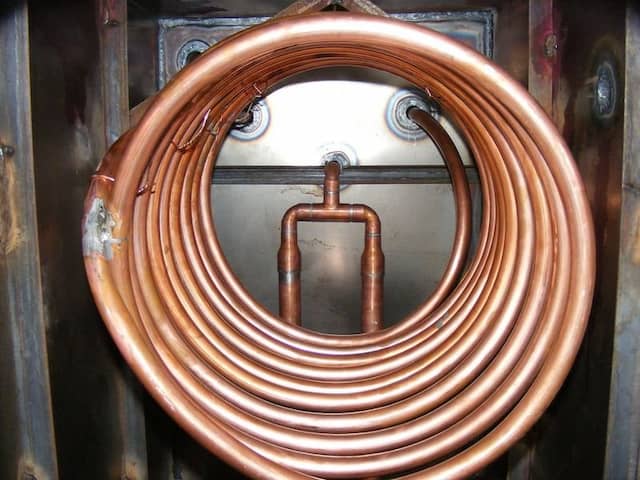
Heat Pipe Heat Exchanger
- Estimate pricingPrice on request
- TypeHeat pipe heat exchanger (HPHE)
- Operating principleNear-isothermal, no cold spot formation
- Flue gas exit temperature (study basis)200 °C
- Heat recovery increments studied60, 80, 100, 120 °C
Your request goes to Fitzer Incorporation. Follow up with them in Messages on Global Trade Plaza.
Products Description
Flue Gas Heat Recovery Study Every 20C heat recovered from Flue Gases translates to ~1% improvement in Boiler efficiency. For flue gases with SOx and/or sooty, particulate material Conventional heat exchangers suffer from cold spot and SOx condensation corrosion due to cold spots. Also, sooty flue gases offer challenges with respect to cleaning and maintenance in conventional exchangers. HPHE operates at isothermal conditions and hence does not suffer from cold spot formation. Flue gases can be cooled close to the condensation temperature allowing higher heat recovery. Automated or manual in-situ cleaning of HPHE makes it an ideal exchanger for sooty flue gases. This study focuses on a boiler producing 6 t/h saturated steam at 10 bars. Two fuel cases have been considered for this study, Briquettes and Natural Gas. Briquette fired boiler The flue gases will contain a high amount of particulate/soot. The evaporator section of the HPHE for this case has non finned smooth heat pipes and is fitted with an Ultra-Sonic soot blower. The graph on the right shows the Cost Saved per year and HPHE CAPEX for 60, 80, 100, 120 �°C heat recovered from flue gases, assuming the flue gas exits the boiler at 200�°C. Savings is calculated based cost of steam @ Rs 2.3/kg Savings is calculated based cost of steam @ Rs 4.2/kg Natural Gas fired boiler The HPHE for this case will have fins in the evaporator section to improve the overall heat transfer. In case there is SOx in the flue gas, the gases can be cooled to a temperature close to the dew point at the stack exit. The graph on the left shows the Cost Saved per year and HPHE CAPEX for 60, 80, 100, 120 �°C heat recovered from flue gases, assuming the flue gas exits the boiler at 200�°C. The shown Savings and CAPEX figures are estimated values. Connect with us to find our the exact cost savings and HPHE CAPEX for your project.
Product Categories
Products Specification
- TypeHeat pipe heat exchanger (HPHE)
- Operating principleNear-isothermal, no cold spot formation
- Flue gas exit temperature (study basis)200 °C
- Heat recovery increments studied60, 80, 100, 120 °C
- Boiler capacity (study basis)6 t/h saturated steam at 10 bar
- Briquette case evaporatorNon-finned smooth heat pipes with ultrasonic soot blower
- Natural gas case evaporatorFinned heat pipes
- CleaningAutomated or manual in-situ
- Steam cost scenarios (study)Rs 2.3/kg and Rs 4.2/kg



Get a quote from Fitzer Incorporation
Heat Pipe Heat Exchanger from other sellers




More Heat Pipe Heat Exchanger from Category



Post your requirement – Global Trade Plaza
Describe what you need once. Suppliers who deal in it see your requirement as a buy lead and can send you offers.
More related Products from Seller
Other Products from Seller

Buy Online Wholesale Heat Pipe Heat Exchanger from Supplier & Exporter in
The heat pipe heat exchanger (HPHE) is designed for flue gas heat recovery. Automated or manual in-situ cleaning suits sooty flue gases. A study example covers a boiler producing 6 t/h saturated steam at 10 bar, with briquette and natural gas fuel cases. For briquette firing, the evaporator section uses non-finned smooth heat pipes with an ultrasonic soot blower. For natural gas, the evaporator section uses finned heat pipes.
Import Wholesale Heat Pipe Heat Exchanger for Your Business Needs
The seller has not added a specification yet; ask for the data sheet or test certificate. Ask Fitzer Incorporation for a firm quote and delivery terms before you order.
About Supplier
Fitzer Incorporation is a B2B supplier based in India, listed on Global Trade Plaza since October 2026. Use Inquire now or Chat with supplier to ask Fitzer Incorporation for prices, specifications and documents for Heat Pipe Heat Exchanger.
Supplier Details for Heat Pipe Heat Exchanger
- Member since - Oct 2026
- Business Type - Contact Seller
- Deals in Product Type - Heat Exchangers
- Country - India
Frequently Asked Questions (FAQs) on Heat Pipe Heat Exchanger
1. What is the Seller’s Policy on Payment for Heat Pipe Heat Exchanger?
Ask Fitzer Incorporation which payment terms they accept for Heat Pipe Heat Exchanger. Agree the payment terms in writing with the supplier before you pay.
2. How to Place an Order for Heat Pipe Heat Exchanger with Fitzer Incorporation?
Click Get a quote to send your requirement to the supplier Use Chat with supplier to ask questions Post your requirement to hear from other suppliers too
Placing an order for Heat Pipe Heat Exchanger with Fitzer Incorporation is quick and straightforward on Global Trade Plaza, a leading B2B marketplace for global buyers and suppliers. You can:
3. What Should You Consider When Buying Heat Pipe Heat Exchanger Online in 2025?
Product specifications (material, durability, features) Quality certifications and compliance Supplier credibility and customer reviews Minimum Order Quantity (MOQ) and bulk pricing Lead time and delivery timelines
When purchasing Heat Pipe Heat Exchanger from a B2B marketplace in 2025, focus on the following critical factors:
Comparing prices and communicating directly with Fitzer Incorporation can help ensure value for money and better sourcing decisions.
4. Who Are the Top B2B Importers and Buyers of Heat Pipe Heat Exchanger on Global Trade Plaza?
Visit the Buy Leads section Filter by industry, product type, or country Create an account to access full buyer contact details
Global Trade Plaza is home to B2B buyers, wholesalers, distributors, and importers of Heat Pipe Heat Exchanger across industries and countries. To discover the most active and high-value buyers:
5. What is the Port of Dispatch, Estimated Price, and Packaging Type Offered by Fitzer Incorporation?
Fitzer Incorporation, a B2B supplier from India, dispatches Heat Pipe Heat Exchanger primarily through the port at India. Packaging types (e.g., bulk, custom, eco-friendly) and estimated pricing may vary based on order volume and destination. To get detailed logistics and pricing information, use Get a quote or Chat with supplier, or Sign Up for direct supplier interaction.





Explore Top Product Categories
- Alcohol Based Hand Sanitizer
- Paper Soap
- Antibacterial Hand Wash
- Cosmetic Kits
- Detergent Chemicals
- Industrial Chemicals
- Laboratory Chemicals
- Leather Chemicals
- Car Accessories
- Motorcycle Parts
- Automobile Brakes Spare Parts
- Motorcycle, Scooters & ATV Bikes
- Building Construction Machineries & Equipments
- Bricks
- Cupboards, Door, Gates, Grills & Windows
- Wall Tiles
- Filters, Water Treatment Plants
- Household Cleaning Products
- Wiping Rags, Mops, Dusters, Sponge, Brushes, Scourer
- Soap & Detergent
- Industrial Gears & Gear Boxes
- Machined Components
- Bolts
- Nuts
- Food Packaging Bags
- Wooden Packaging Boxes
- Offset Printing Machinery & Equipments
- Packaging Machinery
Related Products
Graphite Block Heat ExchangerCustom Made Heat ExchangerPlate Heat Exchanger Replacement Parts GasketGasketed Plate Heat ExchangersHeat Exchanger Spare Parts PlatePlate heat exchangerHeat exchangerHeat ExchangerPlate Heat ExchangersHME, Heat & Moisture Exchanging SK301CNHMEF & Heat & Moisture Exchanging Filter SK306CPHME, Heat & Moisture Exchanging SK200HME, Heat & Moisture Exchanging SK302PPHMEF & Heat & Moisture Exchanging Filter SK203HMEF, Heat & Moisture Exchanging Filter SK200CPThermal Oil Heater Popular Poultry HeatersH Type Welded Finned TubeTitanium Heat ExchangersBrazed Aluminium Heat-ExchangersHeat Exchangers For Electric VehiclesStainless Steel Shell And Tube Heat ExchangerStainless Plate Heat Exchanger For CoolingStainless Steel Sprial Wound Tube Heat ExchangerSteam Condenser Shell and Tube Heat ExchangerHeat ExchangersHeat ExchangerShell and Tube Heat Exchanger
Related Categories
Heat ExchangersAbrasivesAnchorsBattery ScrapsBearingBoltsCement BagsClampsClipsDies & MouldingsFastenersFlangesGarbage BagsGasketsGlues & AdhesivesGrinding WheelHooks And LoopsHydraulic EquipmentsIndustrial BagsIndustrial BatteriesIndustrial Belts & StrapsIndustrial Brakes & ClutchesIndustrial Chains, Anchor & HooksIndustrial ClothingIndustrial CompressorsIndustrial CouplingsIndustrial Cylinders