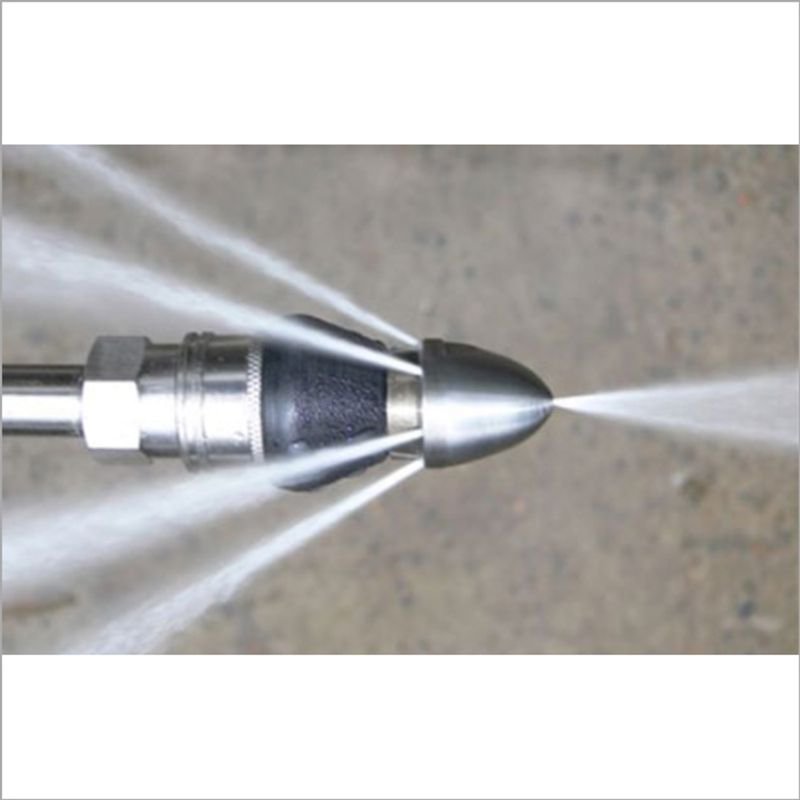
Oxy-fuel Welding Nozzle
- Estimate pricingPrice on request
Your request goes to Geum Tech. Follow up with them in Messages on Global Trade Plaza.
Supplier based in South Korea (Republic Of Korea)On Global Trade Plaza since Oct 2026Similar products from other sellers
Products Description
Oxy-fuel welding (commonly called oxyacetylene welding, oxy welding, or gas welding in the U.S.) and oxy-fuel cutting are processes that use fuel gases and oxygen to weld and cut metals, respectively. French engineers Edmond Fouché and Charles Picard became the first to develop oxygen-acetylene welding in 1903. Pure oxygen, instead of air, is used to increase the flame temperature to allow localized melting of the workpiece material (e.g. steel) in a room environment. A common propane/air flame burns at about 2,250 K (1,980 °C; 3,590 °F), a propane/oxygen flame burns at about 2,526 K (2,253 °C; 4,087 °F), an oxyhydrogen flame burns at 2,800 °C (5,070 °F), and an acetylene/oxygen flame burns at about 3,773 K (3,500 °C; 6,332 °F). Oxy-fuel is one of the oldest welding processes, besides forge welding. In recent decades it has been obsolesced in most all industrial uses due to various arc welding methods offering more consistent mechanical weld properties and faster application. Gas welding is still used for metal-based artwork and in smaller home based shops, as well as situations where accessing electricity (e.g., via an extension cord or portable generator) would present difficulties. In oxy-fuel welding, a welding torch is used to weld metals. Welding metal results when two pieces are heated to a temperature that produces a shared pool of molten metal. The molten pool is generally supplied with additional metal called filler. Filler material depends upon the metals to be welded. In oxy-fuel cutting, a torch is used to heat metal to its kindling temperature. A stream of oxygen is then trained on the metal, burning it into a metal oxide that flows out of the kerf as slag. Torches that do not mix fuel with oxygen (combining, instead, atmospheric air) are not considered oxy-fuel torches and can typically be identified by a single tank (oxy-fuel cutting requires two isolated supplies, fuel and oxygen). Most metals cannot be melted with a single-tank torch. Consequently, single-tank torches are typically suitable for soldering and brazing but not for welding.
Product Categories
Products Specification
- Contact Seller



Get a quote from Geum Tech
Oxy-fuel Welding Nozzle from other sellers


More Oxy-fuel Welding Nozzle from Category

Post your requirement – Global Trade Plaza
Describe what you need once. Suppliers who deal in it see your requirement as a buy lead and can send you offers.
Other Products from Seller
Buy Online Wholesale Oxy-fuel Welding Nozzle from Supplier & Exporter in
Oxy-fuel Welding Nozzle is part of a welding torch used in oxy-fuel welding and cutting processes that combine fuel gases and oxygen to join or sever metals. Pure oxygen increases flame temperature for localized melting, with example flame temperatures given for various gas combinations. In welding, a shared molten pool is formed and filler metal added; in cutting, oxygen burns heated metal into slag that flows out of the kerf.
Import Wholesale Oxy-fuel Welding Nozzle for Your Business Needs
The seller has not added a specification yet; ask for the data sheet or test certificate. Ask Geum Tech for a firm quote and delivery terms before you order.
About Supplier
Geum Tech is a B2B supplier based in South Korea (Republic Of Korea), listed on Global Trade Plaza since October 2026. Use Inquire now or Chat with supplier to ask Geum Tech for prices, specifications and documents for Oxy-fuel Welding Nozzle.
Supplier Details for Oxy-fuel Welding Nozzle
- Member since - Oct 2026
- Business Type - Contact Seller
- Deals in Product Type - Nozzle
- Country - South Korea (Republic Of Korea)
Frequently Asked Questions (FAQs) on Oxy-fuel Welding Nozzle
1. What is the Seller’s Policy on Payment for Oxy-fuel Welding Nozzle?
Ask Geum Tech which payment terms they accept for Oxy-fuel Welding Nozzle. Agree the payment terms in writing with the supplier before you pay.
2. How to Place an Order for Oxy-fuel Welding Nozzle with Geum Tech?
Click Get a quote to send your requirement to the supplier Use Chat with supplier to ask questions Post your requirement to hear from other suppliers too
Placing an order for Oxy-fuel Welding Nozzle with Geum Tech is quick and straightforward on Global Trade Plaza, a leading B2B marketplace for global buyers and suppliers. You can:
3. What Should You Consider When Buying Oxy-fuel Welding Nozzle Online in 2025?
Product specifications (material, durability, features) Quality certifications and compliance Supplier credibility and customer reviews Minimum Order Quantity (MOQ) and bulk pricing Lead time and delivery timelines
When purchasing Oxy-fuel Welding Nozzle from a B2B marketplace in 2025, focus on the following critical factors:
Comparing prices and communicating directly with Geum Tech can help ensure value for money and better sourcing decisions.
4. Who Are the Top B2B Importers and Buyers of Oxy-fuel Welding Nozzle on Global Trade Plaza?
Visit the Buy Leads section Filter by industry, product type, or country Create an account to access full buyer contact details
Global Trade Plaza is home to B2B buyers, wholesalers, distributors, and importers of Oxy-fuel Welding Nozzle across industries and countries. To discover the most active and high-value buyers:
5. What is the Port of Dispatch, Estimated Price, and Packaging Type Offered by Geum Tech?
Geum Tech, a B2B supplier from South Korea (Republic Of Korea), dispatches Oxy-fuel Welding Nozzle primarily through the port at South Korea (Republic Of Korea). Packaging types (e.g., bulk, custom, eco-friendly) and estimated pricing may vary based on order volume and destination. To get detailed logistics and pricing information, use Get a quote or Chat with supplier, or Sign Up for direct supplier interaction.
Related Products






Explore Top Product Categories
- Alcohol Based Hand Sanitizer
- Paper Soap
- Antibacterial Hand Wash
- Cosmetic Kits
- Detergent Chemicals
- Industrial Chemicals
- Laboratory Chemicals
- Leather Chemicals
- Car Accessories
- Motorcycle Parts
- Automobile Brakes Spare Parts
- Motorcycle, Scooters & ATV Bikes
- Building Construction Machineries & Equipments
- Bricks
- Cupboards, Door, Gates, Grills & Windows
- Wall Tiles
- Filters, Water Treatment Plants
- Household Cleaning Products
- Wiping Rags, Mops, Dusters, Sponge, Brushes, Scourer
- Soap & Detergent
- Industrial Gears & Gear Boxes
- Machined Components
- Bolts
- Nuts
- Food Packaging Bags
- Wooden Packaging Boxes
- Offset Printing Machinery & Equipments
- Packaging Machinery
Related Products
3406604 3087648 Common Rail InjectorRefractory Tundish Nozzle & Reverse Step NozzleNozzleSprinklers & NozzlesCutting NozzleReplacement Nozzle Set For G012 1 Pc.VolareNozzles & AccessoriesNozzleBore Size 7.9mm Siliconcarbide Sand Blast NozzleBo-carbideSi-Carbide Venturi Sandblasting NozzleDischarge NozzlePlasma Spray Nozzle and electrode of 9MB,7MB,3MB with Tungsten Insert for Thermal Spraying GunAdhesive for Mono cartons - Nozzle applicationAdhesive for Shipper Box: Wheel & NozzleNozzleSpray nozzle2pcs plastic sprayer nozzle setValve gate nozzleXP142 0.4MM nozzleNozzle automatic assembly machineSquare head concentric type AL-bronze slimSMT NozzleDuraflow spray nozzles with hookStandard nozzlesThermosmart NozzlesNozzle parts
Related Categories
NozzleAbrasivesAnchorsBattery ScrapsBearingBoltsCement BagsClampsClipsDies & MouldingsFastenersFlangesGarbage BagsGasketsGlues & AdhesivesGrinding WheelHeat ExchangersHooks And LoopsHydraulic EquipmentsIndustrial BagsIndustrial BatteriesIndustrial Belts & StrapsIndustrial Brakes & ClutchesIndustrial Chains, Anchor & HooksIndustrial ClothingIndustrial CompressorsIndustrial Couplings