Ginger
- Port of dispatchSri Lanka
- Estimate pricingPrice on request
Your request goes to Aruna Agencies. Follow up with them in Messages on Global Trade Plaza.
Products Description
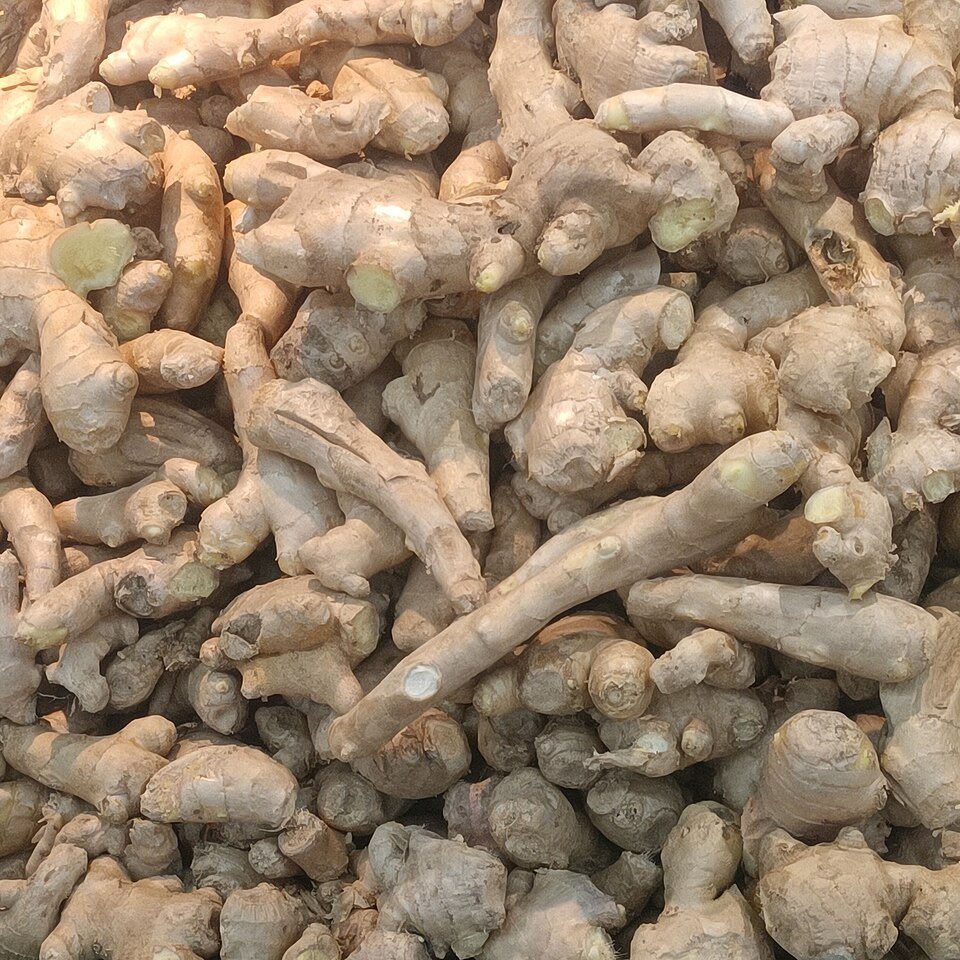
Ginger For ages, ginger has been used as a spice as well as medicine by many people. These applications were mainly popular in the Arabic, Indian, and Asian traditional communities. Later, the plant was exported into the European countries. Today, large scale cultivation is largely practiced in Sri Lanka, China, Australia, India, Hawaii, Japan, and Pakistan. The ginger plant belongs to the Zingiberaceae family. Its species name is Zingiber officinale. The crop grows to a height of about 45 cm. Leaves are lanceolate in nature and have a length of 18cm. The commercial products are the underground stems and rhizomes. Growing Areas Although the cultivation of ginger has widely spread throughout Sri Lanka, the main growing areas are still found in the wet zones. These are the districts of Kegalle, Colombo, Kandy, Kurungala, and Gampaha. During the past years, the total area of growth of this plant has been over 6000 hectares. Some provinces in Sri Lanka also cultivate ginger alongside other crops like coconut. Varieties The large scale growing of ginger in Sri Lanka utilizes local as well as foreign varieties. The local varieties of ginger have small and fleshy rhizomes and are of the white color. These varieties are mainly used for drinks and beverages because of their strong aroma and taste. The Chinese variety of ginger has watery rhizomes that are yellow in color. It is majorly used for pickles since its taste is low. Soils Deep well drained sandy loams largely favor the growth of ginger. These soils should be highly rich in organic matter. Manure and fertilizers should be added in order to improve the fertility of soils. Climate For successful growth, the elevation should reach a maximum height of 1500m above sea level. The average annual rainfall should not be less than 1500mm. For areas prone to dry spells, irrigation should be applied. Generally warm temperatures with shade are also suitable. The pH value should range from 5 to 7. Planting Stem rhizomes are used for propagation of ginger. Deep planting of seeds is discouraged. Harvesting Change of the plantâ??s color to yellow and withering of leaves indicates readiness for harvesting. This occurs after the first 10 months of sowing. Care should be taken during the harvesting process to prevent the damaging of the rhizomes. Wooden sticks are used in this process. The method of preserving the harvested ginger rhizomes is sun drying.
Product Categories
- Contact Seller
Products Specification
- AvailabilityIn stock
- Price$10 - $20
- BrandGlobal Trade Plaza
- Minimum Order Quantity100 Kilograms
- Item ConditionNewCondition



Get a quote from Aruna Agencies





Post your requirement – Global Trade Plaza
Describe what you need once. Suppliers who deal in it see your requirement as a buy lead and can send you offers.
Buy Online Wholesale Ginger from Supplier & Exporter in Sri Lanka
Aruna Agencies lists Ginger on Global Trade Plaza from Sri Lanka. The listing was added in June 2025.
Import Wholesale Ginger for Your Business Needs
Brand: Global Trade Plaza. Ask Aruna Agencies for a firm quote and delivery terms before you order.
About Supplier
Aruna Agencies is a B2B supplier based in Sri Lanka, listed on Global Trade Plaza since June 2025. Use Inquire now or Chat with supplier to ask Aruna Agencies for prices, specifications and documents for Ginger.
Supplier Details for Ginger
- Member since - Jun 2025
- Business Type - Contact Seller
- Deals in Product Type - Contact Seller
- Country - Sri Lanka
Frequently Asked Questions (FAQs) on Ginger
1. What is the Seller’s Policy on Payment for Ginger?
Ask Aruna Agencies which payment terms they accept for Ginger. Agree the payment terms in writing with the supplier before you pay.
2. How to Place an Order for Ginger with Aruna Agencies?
Click Get a quote to send your requirement to the supplier Use Chat with supplier to ask questions Post your requirement to hear from other suppliers too
Placing an order for Ginger with Aruna Agencies is quick and straightforward on Global Trade Plaza, a leading B2B marketplace for global buyers and suppliers. You can:
3. What Should You Consider When Buying Ginger Online in 2025?
Product specifications (material, durability, features) Quality certifications and compliance Supplier credibility and customer reviews Minimum Order Quantity (MOQ) and bulk pricing Lead time and delivery timelines
When purchasing Ginger from a B2B marketplace in 2025, focus on the following critical factors:
Comparing prices and communicating directly with Aruna Agencies can help ensure value for money and better sourcing decisions.
4. Who Are the Top B2B Importers and Buyers of Ginger on Global Trade Plaza?
Visit the Buy Leads section Filter by industry, product type, or country Create an account to access full buyer contact details
Global Trade Plaza is home to B2B buyers, wholesalers, distributors, and importers of Ginger across industries and countries. To discover the most active and high-value buyers:
5. What is the Port of Dispatch, Estimated Price, and Packaging Type Offered by Aruna Agencies?
Aruna Agencies, a B2B supplier from Sri Lanka, dispatches Ginger primarily through the port at Sri Lanka. Packaging types (e.g., bulk, custom, eco-friendly) and estimated pricing may vary based on order volume and destination. To get detailed logistics and pricing information, use Get a quote or Chat with supplier, or Sign Up for direct supplier interaction.







Explore Top Product Categories
- Alcohol Based Hand Sanitizer
- Paper Soap
- Antibacterial Hand Wash
- Cosmetic Kits
- Detergent Chemicals
- Industrial Chemicals
- Laboratory Chemicals
- Leather Chemicals
- Car Accessories
- Motorcycle Parts
- Automobile Brakes Spare Parts
- Motorcycle, Scooters & ATV Bikes
- Building Construction Machineries & Equipments
- Bricks
- Cupboards, Door, Gates, Grills & Windows
- Wall Tiles
- Filters, Water Treatment Plants
- Household Cleaning Products
- Wiping Rags, Mops, Dusters, Sponge, Brushes, Scourer
- Soap & Detergent
- Industrial Gears & Gear Boxes
- Machined Components
- Bolts
- Nuts
- Food Packaging Bags
- Wooden Packaging Boxes
- Offset Printing Machinery & Equipments
- Packaging Machinery
Related Products
GingerOrganic GingerFresh GingerGingerFresh Matured GingerFresh GingerHigh Quality Fresh Clean GingerFresh GingerGingerGingerFresh Yellow Ginger VietnamFresh GingerFresh GingerOrganic GingerFresh GingerGingerGinger (Fresh Or Dried)GingerGingerQuality 100% Fresh GingerFresh GingerEmprit GingerGood Quality Fresh Ginger and Dry GingerGingerGingerGingerGinger